
SOLUTION //
Certalert Investigator
A CVSS score rates a flaw, not your exposure. How 2501 finds out whether a vulnerability alert on RHEL-based hosts is really exploitable there, and changes nothing.
TICKETS FROM
ServiceNow or another ITSM
SAFEGUARDS
Your rules, confirmation and blacklists
AUTONOMY
Investigate only, with a person, or on its own
DEPLOYMENT
On-prem, cloud or hybrid
█
SOLUTION_BRIEFING
// HOW 2501 HANDLES IT
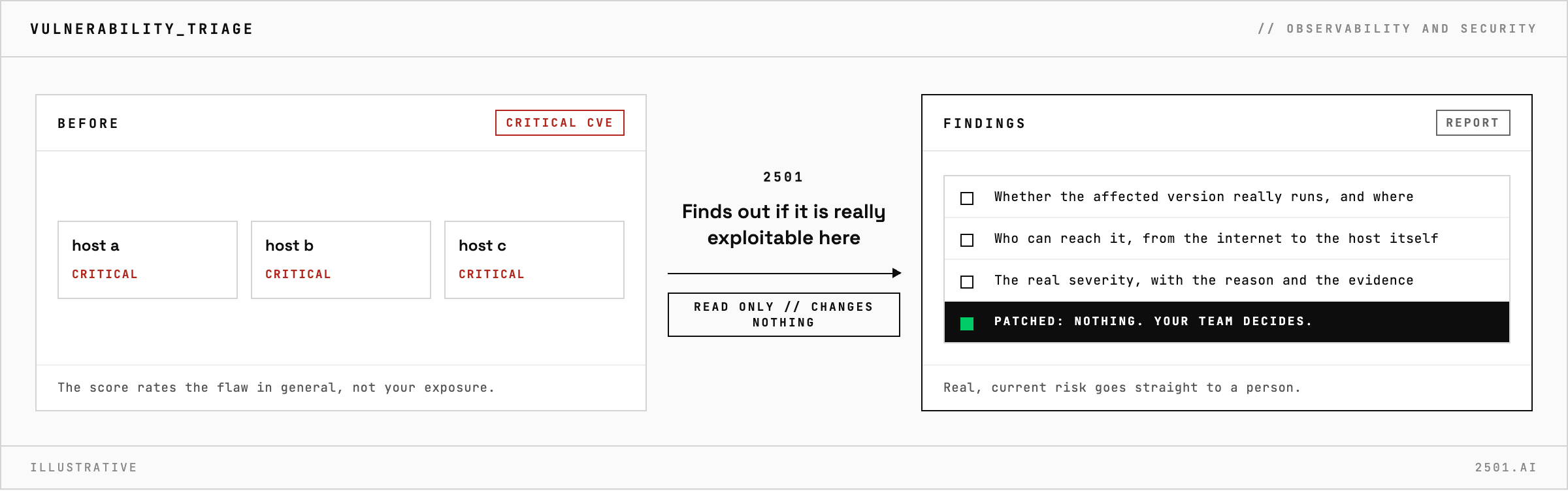
A severity score rates a vulnerability in general; whether it is dangerous depends on where the software runs and who can reach it. 2501 investigates each vulnerability alert on RHEL-based systems such as Rocky Linux to find out whether it is really exploitable there, and changes nothing while it does.
A scanner flags a critical CVE across dozens of hosts. Each one needs someone to check whether the affected software even runs there, in which version, and who can reach it, while the host that is really exposed waits in the same queue.
The Certalert Investigator takes each alert from your ticketing system. It establishes whether the affected version is really running, where (a Kubernetes pod, a container, a system service or a plain process), and who can reach it, from the internet down to only the host itself. It weighs protections such as authentication, then reclassifies the severity with the reason and the evidence. A severity comes down only on evidence, and doubt counts against the service. Signs of real, current risk, such as a vulnerable service open to the internet without authentication, go straight to a person.

Does it patch the vulnerable package? No. It reports the real severity and a recommendation, and your team decides what to patch and when.
Can it lower an alert's severity? Yes, when the evidence shows no realistic path for an attacker, such as a service reachable only from the host itself.
> READY_TO_DEPLOY
Book a technical demo and walk through your own environment with the 2501 team.
